
Running a Sex Offender Check in Vermilion Parish
The official starting point is the Louisiana State Sex Offender and Child Predator Registry search, maintained through Louisiana State Police and the Bureau of Criminal Identification and Information. Search by a known name or switch to a location search and choose Vermilion Parish. The registry covers public information required by Louisiana law; it is more authoritative than a reposted list or an old social-media image.
Keep the reason for searching in view. The registry supports personal and family safety planning and community awareness. Before treating a result as a match, compare the photograph, aliases, age or birth information, physical description, and offense jurisdiction. The absence of a result does not establish that a person or location is risk-free. A spelling variation, an interstate move, a reporting delay, or an offense that does not trigger public registration can all affect what appears.
Vermilion VPSO Registry Role
Louisiana State Police maintains the central registry, but local verification work has a Vermilion address and phone line. The Vermilion Parish Sheriff's Office lists its Sex Offenders unit at 337-740-4516. Investigations is at 407 Charity Street, second floor, in Abbeville. That line is the appropriate local route to confirm registration procedure or report suspected noncompliance without approaching the person involved.
The LSP registry information page explains the system's public-safety purpose and its accuracy warning. It also provides the route into the search service. Local management agencies verify and update information, while the central system publishes the fields the statute makes public. An emergency still belongs with 911; a nonemergency question about a Vermilion registrant belongs with VPSO or LSP.
The official LSP page shows the warning and registry entry point that searchers should read before continuing.
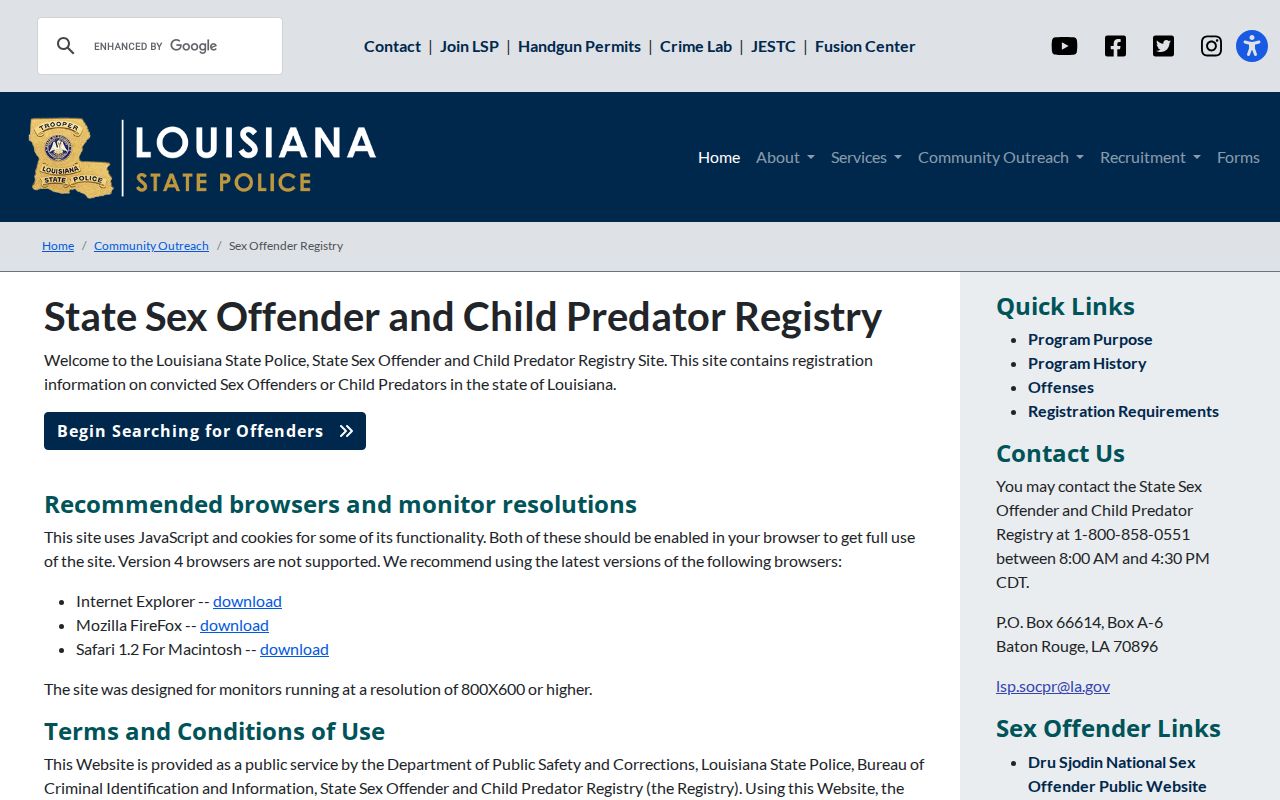
That warning matters locally: a public profile is a lead for careful verification, not permission to accuse, publish new allegations, or take action against a household.
Searching the Louisiana State Sex Offender and Child Predator Registry
The registry offers distinct name and location workflows. Use the fewest reliable filters first, then refine. Exact wildcard behavior was not documented in the official material reviewed, so try a careful spelling and check known aliases rather than assuming the service treats partial names a certain way.
- Open the official LSP search, read the conditions and accuracy notice, then choose the name or location workflow.
- Enter a first and last name when identity is known, or supply an address, city, ZIP, Vermilion Parish, and an offered radius for a geographic check.
- Review the result list and compare the photograph, aliases, age, and descriptors before selecting a possible match.
- Open the profile, read the offense jurisdiction, registration status, tier, and last verification or update, then contact VPSO if something requires official confirmation.
| Field Label | Type | Required | Notes |
|---|---|---|---|
| Last Name | Text | Primary name field | Official material does not specify exact or wildcard behavior. |
| First Name | Text | Optional or unspecified | Spelling matters; check aliases shown on profiles. |
| City / ZIP | Text or dropdown | Conditional | Use Abbeville, Kaplan, Gueydan, or the relevant five-digit ZIP. |
| Parish | Dropdown | Optional | Select Vermilion for a parish-wide filter. |
| Address / Radius | Text and dropdown | Conditional | Available for proximity searching; read the live choices for offered distances. |
Vermilion Registry Search Options
A name search answers an identity question. It works best when the reader already has a full name and another identifier. A location search answers a different question: which published registrants are associated with an area around a supplied address? It can be more useful for neighborhood awareness, but the radius is not a boundary of safety and the map is only as current as the underlying reports.
The official registry search screen makes those choices visible before a query begins.
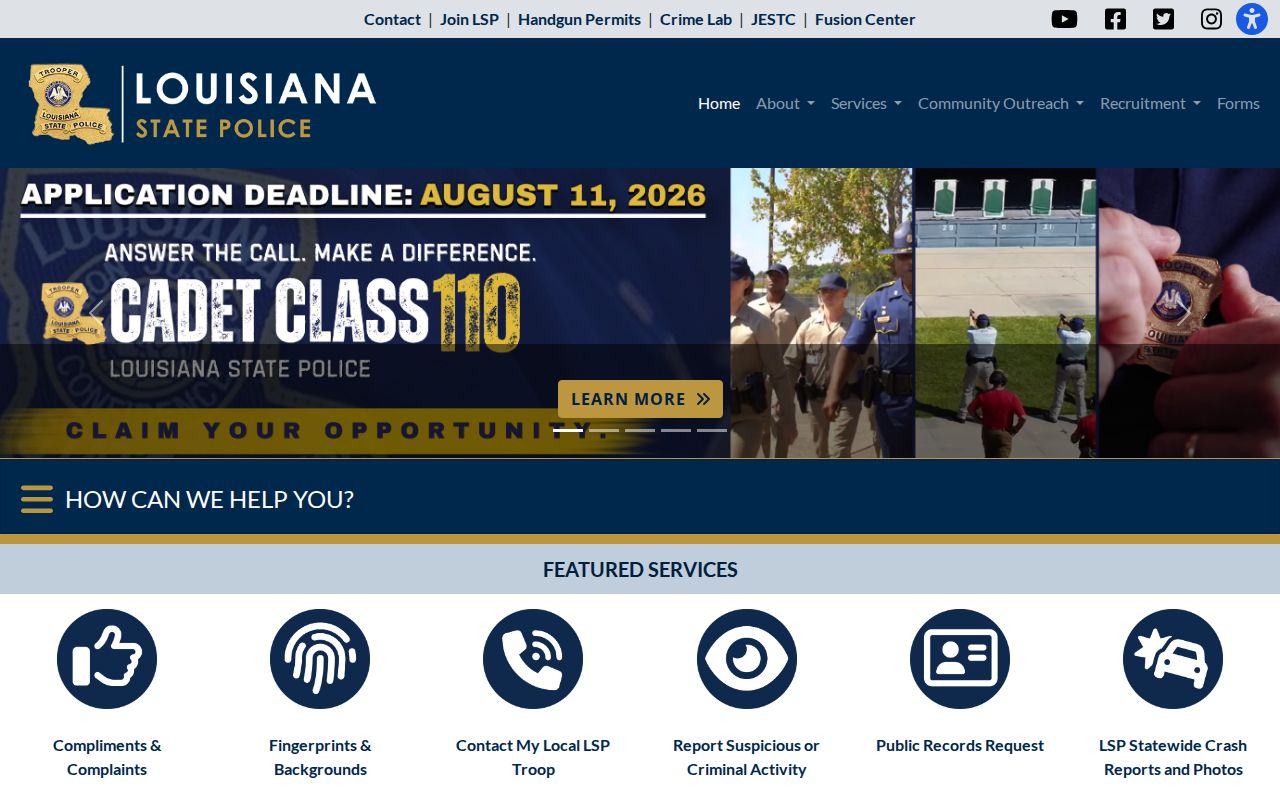
For either route, capture the profile's update date and the details used to make the match. That small step makes a later call to VPSO more precise and helps avoid confusing two people with similar names.
What a Registry Profile Shows
A public Louisiana profile joins identification, location, conviction, and registration information. Exact fields vary with the record and statutory limits. The profile may include a current photograph, physical traits, a mapped residence, work or school information when legally published, the registering agency, and the last verification. It should not be read as a complete criminal history or as a list of new accusations.
| Name & Aliases | Legal name plus reported aliases used to distinguish identities. |
|---|---|
| Photo & Physical Description | Current photograph where supplied, plus sex, race, age or DOB, height, weight, hair, eyes, and identifying marks. |
| Registered Address | Residential location and map, with work or school data when Louisiana law makes it public. |
| Offense & Statute | Description, statute or jurisdiction, conviction date, and limited victim category where authorized. |
| Level / Tier | The assigned Louisiana tier and general registration duration; assignment is offense-specific. |
| Registration Status | Compliance or management status, registering agency, and last verification or update. |
Vermilion Registry Update Dates
The registry expressly declines to guarantee accuracy, completeness, or timeliness for a named person or for everyone near a location. Read the update and verification fields before relying on an address or status. A recent date does not turn the page into a prediction of conduct, while an older date is a reason to ask the managing agency for clarification rather than fill the gap with assumptions.
If information appears wrong, record the profile URL and the precise field at issue. Call VPSO Sex Offenders at 337-740-4516 or use the LSP contact route. A suspected address violation or other noncompliance should be reported to law enforcement. Do not confront the registrant, post a claim as fact, or attempt an independent investigation.
Registration Requirements and Levels in Louisiana
Louisiana uses an offense-driven tier system rather than a risk score a reader can infer from a generic list. R.S. 15:541 and R.S. 15:542.1 and following provisions control assignment, start dates, tolling, duration, exceptions, verification, and notification. The simplified table gives the general framework only. Read the governing statute and the actual profile before drawing a conclusion about an individual obligation.
| Level / Tier | Duration | Verification Frequency |
|---|---|---|
| Tier I | Generally 15 years | Typically annual in-person verification |
| Tier II | Generally 25 years | Typically semiannual verification |
| Tier III | Generally lifetime | Typically quarterly verification |
Vermilion Registry Checks Beyond Louisiana
A Louisiana-only search ends at the state boundary. For a person who has lived elsewhere or for awareness across nearby jurisdictions, use the federal Dru Sjodin National Sex Offender Public Website. NSOPW queries participating state, territorial, and tribal registries; it does not replace Louisiana's profile or VPSO's local verification role.
The national search page illustrates why an interstate query is a separate step rather than a second copy of the Vermilion results.
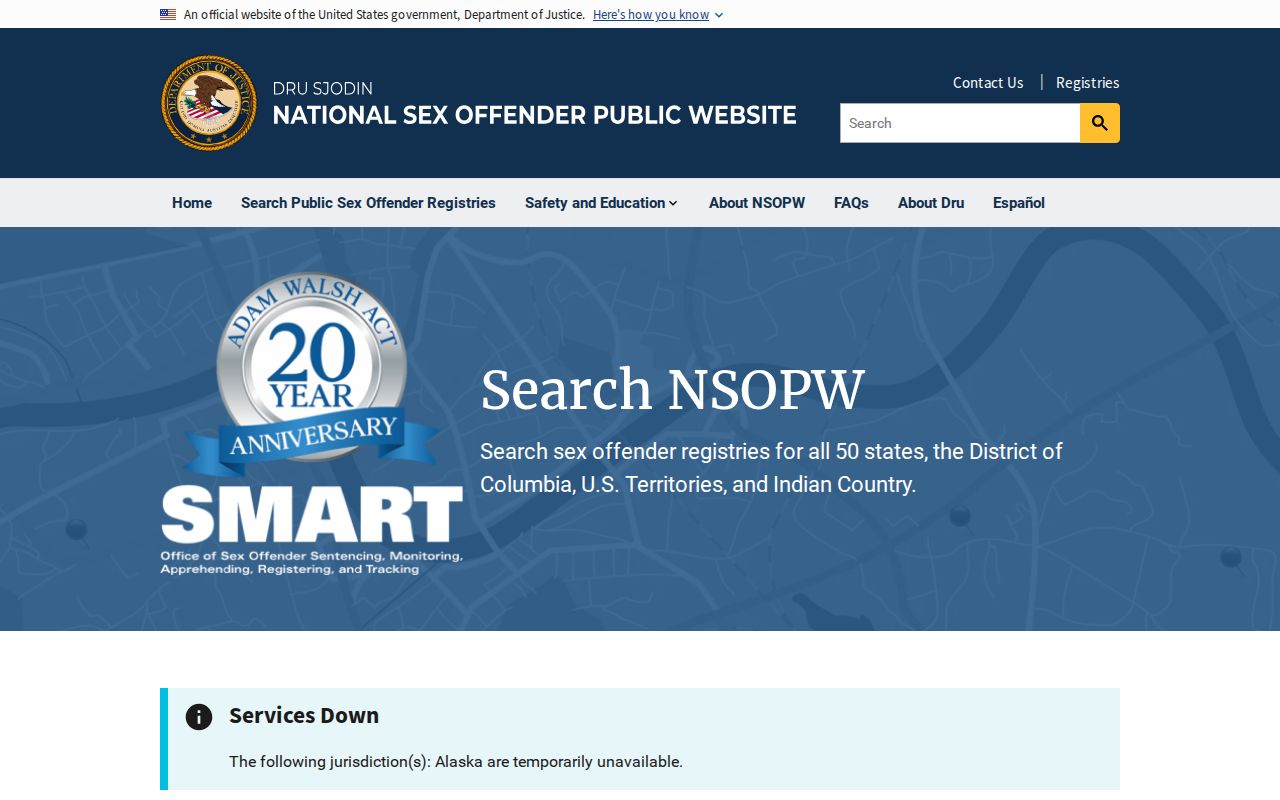
Compare a national result with the originating registry because states publish different fields and follow their own update processes. In rural Vermilion, travel and prior residence can cross parish or state boundaries, but a broad search still cannot establish that an unlisted person poses no risk.
Vermilion Offender Residence Rules
Do not derive a residence restriction from tier alone. Louisiana provisions, including R.S. 14:91.1, apply according to exact statutory triggers such as the offense and victim-age category. Community notification may reach schools, child-care facilities, and neighbors as the statute prescribes, but the central registry and local management agency remain the sources for published status.
A map pin also does not answer whether an address complies with every rule. The correct response to a concern is to provide the address and profile details to VPSO. Officers can compare the facts with the governing law and current registration record; members of the public should not attempt enforcement.
Lawful Use and Community Notification
Registry information exists for awareness and safety planning. Use it to understand published information, talk with family members about practical precautions, and give law enforcement a specific concern. It is not a license for vigilantism, threats, intimidation, or harassment. Nor does a listing prove a person has committed a new offense. Community notification and enforcement operate through the channels Louisiana law establishes.
Use registry information lawfully. Harassing, threatening, or intimidating a registrant or anyone in the household can be criminal and can undermine public safety. Report emergencies to 911 and suspected noncompliance to VPSO at 337-740-4516.